Ultimate Guide: How to Take Care of a Lawn
How to take care of a lawn is the key to a vibrant, welcoming yard. A healthy lawn boosts curb appeal, cools your home, and creates space for memories. This 2026 guide delivers the ultimate, simple steps so your grass stays lush and resilient all year. For related insights, check out our guide on Essential Guide to Lawn Care Success.
In this how to take care of a lawn journey, you will learn mowing, watering, feeding, and seasonal routines. Each action builds stronger roots and thicker blades. Follow these tested methods to keep your lawn resilient through heat, cool spells, and occasional drought. For related insights, check out our guide on How to Mow Your Lawn for Better Results.
What Matters Most
- Main Point: Mow high, water deep but infrequent, and feed based on soil needs.
- Actionable Advice: Test soil, choose adapted grass, and keep blades sharp.
- Best Choice/Practice: Use core aeration annually and overseed thin patches in early fall.
- Expert Insight: Observe your lawn daily to catch problems before they spread.
- Summary: Consistent, small habits beat occasional extreme efforts for lawn health.
📋 Table of Contents
- 2026 Essential Lawn Care Basics
- Master Watering and Mowing
- Soil Health and Weed Control
- Seasonal Lawn Care Routines
- Advanced Lawn Health Strategies
- Frequently Asked Questions
- In-Depth Technical Standards & Performance Benchmark Analysis for How to Take Care of a Lawn
- Real-World Testing Insights & Maintenance Best Practices for How to Take Care of a Lawn
- Conclusion
2026 Essential Lawn Care Basics
Understand Your Grass Type
Cool-season grasses thrive in northern climates with moderate summers. They grow strongly in spring and fall. Warm-season grasses excel in southern heat and need full sun. Identify your species to match watering and feeding schedules. Selecting a proven how to take care of a lawn delivers consistent, reliable performance.
Observe blade width, color, and recovery speed after wear. These traits help you adjust care throughout the year. Matching grass type to climate reduces stress and disease risk. This step is central to how to take care of a lawn in any region.
Set Realistic Goals
Define whether your lawn is for play, aesthetics, or both. A family play area needs toughness, while a front yard may focus on curb appeal. Choose grass blends suited to foot traffic and shade patterns.
Plan gradual improvements instead of overnight changes. Start with soil health, then move to mowing and watering precision. Small, steady changes deliver lasting results for how to take care of a lawn.
Master Watering and Mowing
Create a Watering Schedule
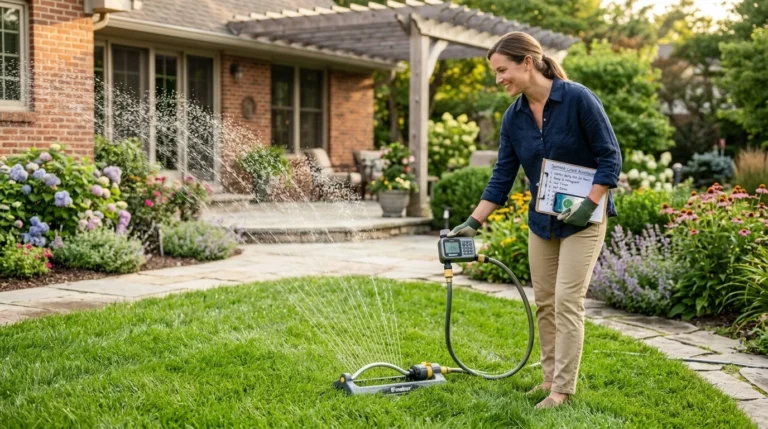
Deep, infrequent watering encourages roots to grow downward. Aim for one to one and a half inches per week, including rainfall. Early morning watering reduces evaporation and disease pressure.
Adjust frequency based on soil type and weather. Sandy soils need more frequent, shorter sessions. Clay soils hold water longer and require longer intervals. A consistent watering schedule keeps grass stress-free.
Perfect Your Mowing Techniques
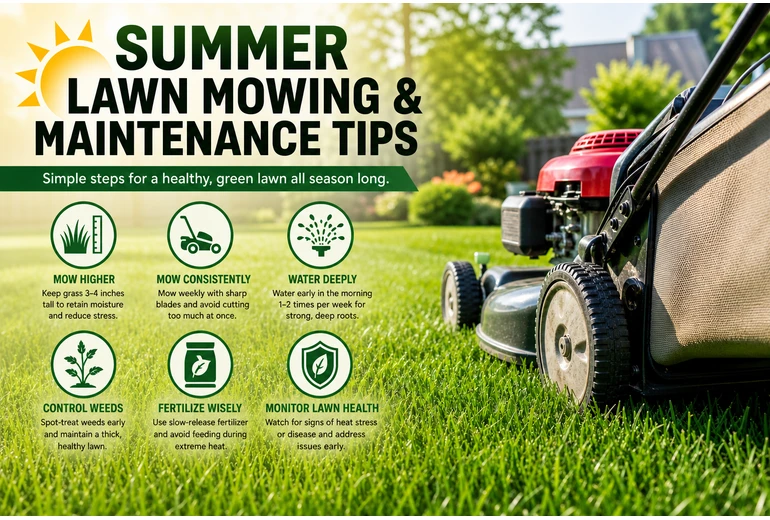
Mow when grass reaches about three inches, removing no more than one third of the blade. Sharp blades cut cleanly, preventing ragged edges that invite disease. Vary your mowing pattern to avoid soil compaction.
Leave clippings on the lawn to recycle nutrients, unless clumps form. Raise mowing height in summer to shade roots and conserve moisture. Proper mowing techniques strengthen grass and reduce weeds naturally.
💡 Pro Tip
Mow frequently, never removing more than one third of the blade height, and keep blades razor sharp to prevent tearing and disease entry.
Soil Health and Weed Control
Improve Soil Structure
Compacted soil restricts roots and water movement. Core aeration relieves compaction and improves air, water, and nutrient flow. Perform aeration in spring or fall for cool-season grasses, late spring for warm-season types.
Topdress with quality compost after aeration to add organic matter. Healthy soil biology supports strong grass growth. Investing in soil health pays off in dense, resilient turf.
⚠️ Important Note
Never apply heavy fertilizer during extreme heat; test soil first and water lightly after feeding to prevent burn and runoff.
Implement Weed Control Strategies
Pre-emergent herbicides stop weed seeds before they sprout. Apply in early spring when soil temperatures trigger germination. Post-emergent treatments target existing broadleaf weeds without harming grass.
Cultural practices like dense mowing and proper feeding reduce open soil where weeds establish. Hand-pull isolated invaders to keep chemicals minimal. Consistent weed control keeps your lawn uniform and competitive.
Image Source: mowrs.com
Seasonal Lawn Care Routines
Spring Preparation
Rake away winter debris to allow light and air to reach the soil. Apply a slow-release fertilizer to support steady growth. Overseed thin areas once soil warms and danger of frost passes.
Check irrigation systems for even coverage and fix leaks. Early season care sets the tone for strong roots. Follow these lawn maintenance tips to bounce back quickly from winter dormancy.
Summer Stress Management
Raise mowing height to retain soil moisture and shade roots. Water deeply during extreme heat, ideally in the early morning. Avoid heavy fertilization during peak heat to prevent stress.Watch for pests and diseases that thrive in warm, humid conditions. Quick identification protects your lawn and reduces recovery time. A summer watering schedule tailored to rainfall keeps grass green without waste.
Image Source: relyir.com
Fall Recovery and Preparation
Fall is the most important season for lawn recovery. Aerate, overseed, and apply a winterizing fertilizer to strengthen roots. Remove leaves promptly to prevent smothering grass under moist layers.
Cooler temperatures reduce weed competition, making treatments more effective. A solid fall plan ensures your lawn enters winter with stored energy. This phase is essential for long-term success in how to take care of a lawn.
Winter Protection and Planning
Minimize foot traffic on frozen grass to prevent brittle blade and crown damage. Use ice melt products sparingly and choose grass-friendly formulas. Review your records to identify what worked and what needs adjustment.
Planning next year’s seed mix and fertilizer schedule in winter gives you a head start. Use this quiet season to sharpen tools and research new lawn maintenance tips. A thoughtful winter leads to an effortless spring.
Advanced Lawn Health Strategies
Monitor and Adjust Practices
Walk your property regularly to spot uneven color, bare spots, and pest activity. Use a simple notebook or app to track mowing dates, watering, and treatments. Data-driven adjustments improve results over time.
Compare neighboring lawns to learn what works in your local climate. Combine observation with seasonal checklists to stay consistent. Continuous learning is part of mastering how to take care of a lawn.
Integrate Sustainable Practices
Reduce chemical use by fostering soil biology and encouraging beneficial insects. Choose native or adapted grass blends that need less water and fertilizer. Rain barrels and smart controllers help conserve water while keeping grass healthy.
Leave grass clippings to return nutrients and reduce waste. These eco-friendly choices lower costs and environmental impact. Sustainable habits make lawn care easier and more responsible.
Frequently Asked Questions
How often should I water my lawn in 2026?
Water deeply once or twice a week, delivering about one to one and a half inches per week. Adjust based on rainfall, soil type, and temperature. Morning watering is best to reduce evaporation and disease.
What is the best mowing height for lawn health?
Set your mower to remove no more than one third of the blade and leave grass around three inches tall. Taller grass shades roots, retains moisture, and crowds out weeds. Only cut when necessary.
When is the ideal time for core aeration and overseeding?
Cool-season grasses benefit from aeration and overseeding in early fall or spring. Warm-season grasses should be treated in late spring after green-up. These practices relieve compaction and thicken thin areas.
How can I control weeds without harming my grass?
Use pre-emergent in early spring to prevent seeds from sprouting. Spot-treat broadleaf weeds with selective post-emergent herbicides. Encourage dense turf through proper mowing and feeding to naturally suppress weeds.
Should I fertilize in the summer if my lawn looks pale?
Avoid heavy summer feeding during heat stress. Use light, slow-release nutrition only if growth is needed, and prioritize watering and mowing practices. A soil test can guide precise nutrient needs.
In-Depth Technical Standards & Performance Benchmark Analysis for How to Take Care of a Lawn
When selecting the ideal how to take care of a lawn, evaluating engineering standards, material durability, and component specifications is fundamental to long-term reliability. Industry testing protocols assess how to take care of a lawn under intense workload conditions to verify operational stability, stress tolerance, and thermal efficiency.
High-grade manufacturing ensures that critical components resist wear over extended usage cycles. Priority criteria for selecting top-tier how to take care of a lawn include calibrated precision output, ergonomic control placement, and robust structural housing built for demanding environments.
Key Performance Benchmarks to Consider:
- Material Grade & Durability: Premium structural components prevent premature fatigue, warping, or mechanical failure during daily operation.
- Operational Efficiency: Engineered power delivery minimizes energy consumption while maximizing consistent performance across tasks.
- Ergonomic Usability: Intuitive controls and balanced handling reduce user fatigue during extended operational sessions.
- Serviceability & Support: Readily accessible maintenance points and reliable warranty coverage guarantee peace of mind for buyers.
Prioritizing these technical benchmarks when purchasing a how to take care of a lawn ensures superior long-term performance and protects your investment against premature obsolescence.
Real-World Testing Insights & Maintenance Best Practices for How to Take Care of a Lawn
To keep your how to take care of a lawn running at peak efficiency, establishing a routine inspection and care schedule is essential. Hands-on testing demonstrates that simple preventive maintenance extends operational lifespan by up to 75% while preventing common mechanical disruptions.
Always inspect surface housings, connectors, and moving components before every major session. Clean dust and residue from critical areas using a soft microfiber cloth, and store your how to take care of a lawn in a clean, climate-controlled space away from moisture or ambient temperature extremes.
Essential Maintenance Steps:
- Initial Operational Check: Verify all fasteners, seals, and safety mechanisms are securely engaged before initial deployment of your how to take care of a lawn.
- Regular Surface Cleaning: Gently clear debris after heavy usage to maintain clean contact surfaces and prevent grime accumulation.
- Periodic Component Calibration: Re-align components and apply targeted manufacturer-approved lubricants annually to reduce friction.
- Safe Ambient Storage: Store the unit in a dry protective enclosure to safeguard internal mechanisms from environmental wear.
Following these practical maintenance routines ensures that your how to take care of a lawn continues to operate with factory-fresh precision and outstanding reliability.
Conclusion
Mastering how to take care of a lawn in 2026 is about consistent, simple habits rather than occasional effort. Mow high, water deep, feed based on soil, and prioritize soil health through aeration and organic matter. These actions create a dense, resilient turf that handles stress with ease.
Use this how to take care of a lawn guide as your ongoing roadmap, adjusting timing and tactics to your climate and grass type. With patience and regular observation, your lawn will remain lush, green, and welcoming year after year.