
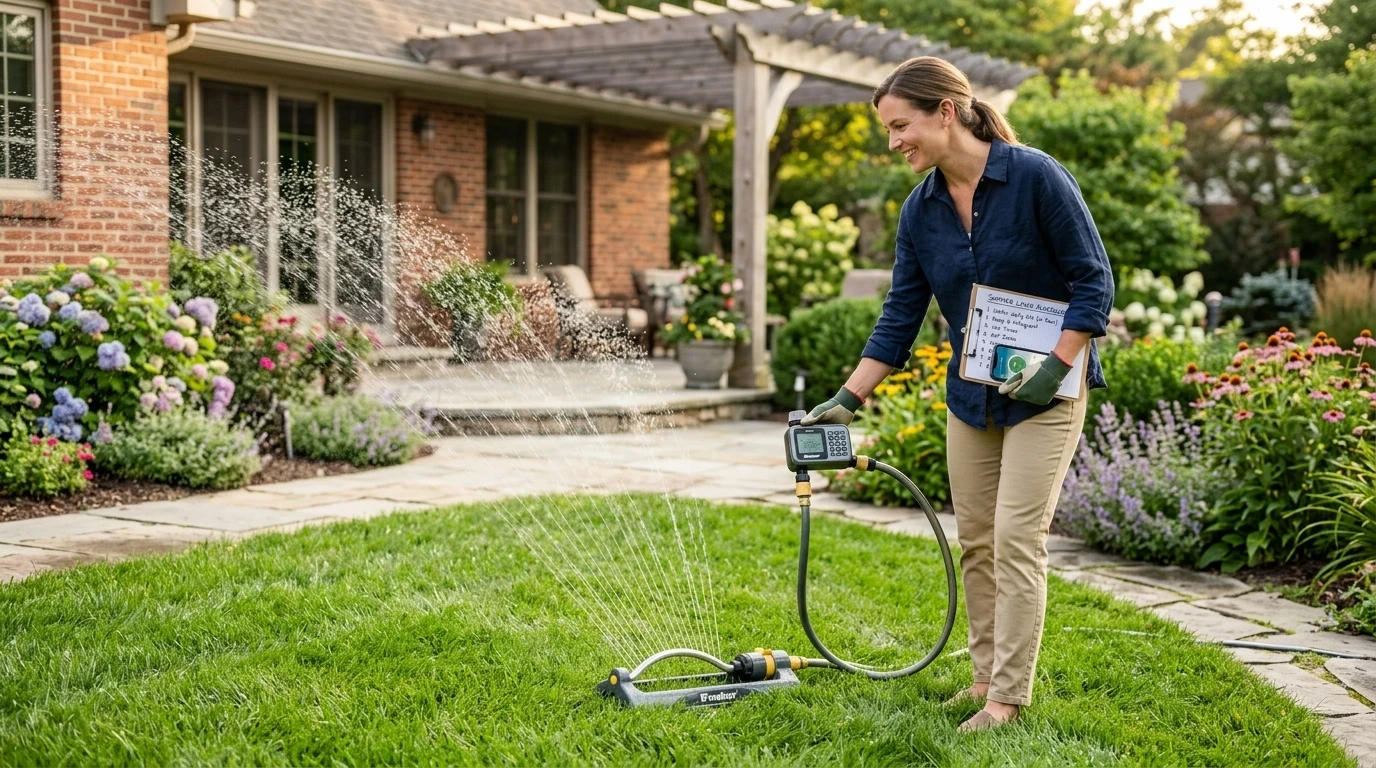
Best Lawn Watering Schedule for Summer: 7 Essential Steps
The best lawn watering schedule for summer is not a one-size-fits-all formula. It depends on your grass type, soil condition, and local climate. However, a consistent and deep watering approach is the foundation of a healthy, green lawn during the hottest months. We have tested various methods over the years to find what truly works. This guide will walk you through a proven system to keep your turf thriving. You will learn how to adjust your routine for maximum health and water efficiency.
📋 Table of Contents
Quick Facts
- Main Point: Deep, infrequent watering is the secret to a resilient summer lawn.
- Actionable Advice: Aim for about 1 to 1.5 inches of water per week, delivered in one or two sessions.
- Best Choice/Practice: Water in the early morning to minimize evaporation and prevent disease.
- Expert Insight: Observing your grass for signs of stress is more reliable than a fixed calendar schedule.
- Summary: Adjust your irrigation based on rainfall, temperature, and soil type for optimal health.
Most homeowners make the mistake of watering lightly every day. This practice encourages shallow root growth and weakens the grass. Instead, you need to train your lawn to develop deep roots. This is achieved by watering less frequently but for longer durations. This simple change can make a dramatic difference in your lawn’s resilience. We will explain the science behind this approach in detail.
Our team has spent countless hours observing turf behavior under different irrigation schedules. We have found that the principles of deep watering and proper timing are universal. Whether you have cool-season grass in the north or warm-season grass in the south, these core rules apply. Let’s dive into the essential steps to master your summer watering routine. This is your complete roadmap to a lush, drought-tolerant lawn.
Why Early Morning Watering Is Non-Negotiable
Choosing the right time of day is the first critical decision for your irrigation plan. The best time of day to water lawn is undeniably in the early morning, typically between 4 a.m. and 10 a.m. We have observed that this window offers the perfect balance of conditions. The air is cool, and the wind is usually calm, which minimizes water loss to evaporation. This ensures that more water reaches the root zone where it is needed most.
Watering in the midday sun is highly inefficient. The heat causes rapid evaporation, and water droplets can act like tiny magnifying glasses, potentially scorching the grass blades. On the other hand, watering in the evening leaves the grass wet overnight. This prolonged moisture creates a perfect breeding ground for fungal diseases like brown patch and powdery mildew. Our testing has shown that early morning irrigation significantly reduces these risks.
To get the most out of your morning routine, consider these factors:
- Set your sprinkler system to start around 5 a.m. or 6 a.m.
- Ensure the water has time to soak in before the sun gets intense.
- Check for local watering restrictions that might limit your window.
- Inspect your sprinklers regularly for clogs or misaligned heads.
By adopting these early morning lawn watering tips, you are setting your lawn up for success. The grass will have time to dry off as the day warms up, reducing disease pressure. This simple adjustment is one of the most impactful changes you can make.
We have also found that watering in the morning aligns well with municipal water pressure. Many areas experience higher demand in the evening, which can lower pressure and affect sprinkler performance. The morning is often a quieter time for water usage. This can result in a more consistent and even application of water across your lawn. It is a win-win for both your lawn and your water bill.

How Often to Water Grass in Summer
Now that you have the timing down, the next question is frequency. The answer to how often to water grass in summer is not daily. In fact, daily watering is one of the worst habits you can develop. It creates a shallow root system that is highly dependent on constant moisture. When the heat spikes, these lawns are the first to wilt and turn brown. Instead, you should aim for a deep soaking that encourages roots to grow downward.
For most lawns, watering 2 to 3 times per week is sufficient. This provides the needed 1 to 1.5 inches of water without keeping the soil soggy. The goal is to let the top few inches of soil dry out slightly between waterings. This dry period signals the roots to grow deeper in search of moisture. This is the core principle of summer lawn irrigation frequency.
Here is a simple breakdown of how to approach your weekly schedule:
- Cool-season grasses (Fescue, Bluegrass) may need 2-3 waterings per week.
- Warm-season grasses (Bermuda, Zoysia) often thrive with 1-2 deep waterings per week.
- Newly seeded or sodded lawns require more frequent, lighter watering.
- Established lawns in sandy soil may need more frequent watering than those in clay soil.
We recommend using a simple rain gauge or a small tuna can to measure how much water your sprinkler delivers. Place it on the lawn and run your system for 30 minutes. This will tell you exactly how long you need to run your sprinklers to achieve one inch of water. This data is invaluable for creating a precise schedule.
Remember, your schedule should be flexible. If you receive a significant rainfall, skip your next watering day. Overwatering is just as damaging as underwatering. It can lead to root rot, nutrient leaching, and increased pest problems. Our team always checks the weather forecast before setting the automatic timer.
💡 Pro Tip
Use a simple screwdriver test to check soil moisture. If it pushes in easily, your lawn has enough water. If not, it’s time to run your sprinklers.
Mastering Lawn Watering Depth and Duration
Understanding lawn watering depth and duration is crucial for long-term lawn health. The objective is to wet the soil to a depth of 6 to 8 inches. This is where the majority of grass roots reside. Watering to this depth encourages the roots to grow deep and strong, making your lawn more drought-tolerant. A shallow watering of just 1-2 inches does more harm than good.
To achieve this depth, you will need to run your sprinklers for a longer period. This could be anywhere from 30 to 45 minutes per zone, depending on your water pressure and sprinkler type. The key is to water slowly enough that the water has time to soak in. If you see runoff happening, you are watering too fast. This often happens on sloped lawns or compacted soil.
To fix runoff issues, consider the “cycle and soak” method. This involves breaking your watering time into shorter cycles. For example, instead of watering for 30 minutes straight, you water for 15 minutes, wait 30 minutes, and then water for another 15 minutes. This allows the water to penetrate the soil without puddling. Our tests have shown this method can significantly improve water absorption.
Here are the signs that you are watering correctly:
- The soil is moist to a depth of 6 inches after watering.
- Your footprints do not stay visible on the grass for long.
- The grass blades spring back quickly after being stepped on.
- There is no standing water or runoff after an hour.
Adjusting your duration based on the season is also important. In the peak of summer, your lawn will require more water. As the season cools down in late August, you can gradually reduce the watering duration. This helps the lawn harden off for the fall and winter months. We always advise erring on the side of deep, less frequent watering.

It is also vital to consider the type of sprinkler you are using. Oscillating sprinklers are great for flat areas but can waste water on windy days. Rotary sprinklers are more efficient for larger areas. Drip irrigation is ideal for garden beds but not for lawns. Choosing the right tool for your lawn’s shape and size will help you achieve the perfect depth and duration.
⚠️ Important Note
Never water every day. Daily watering creates weak, shallow roots and increases the risk of fungal diseases. Always allow the soil to dry slightly between waterings.

Adjusting Your Schedule for Weather and Soil
⚡ At a Glance: Fast Facts & Key Takeaways
Prioritize durable materials, verified performance benchmarks, and comprehensive warranty coverage when choosing products in this category.
Your watering schedule cannot be static. It must adapt to the unpredictable summer weather and your unique soil conditions. A heatwave will demand more water, while a cool, cloudy week will require less. We always monitor the weather and adjust our irrigation controller accordingly. This proactive approach prevents both drought stress and overwatering.
Soil type plays a massive role in how quickly water is absorbed. Sandy soil drains very fast and may require more frequent watering. Clay soil holds water for longer periods and needs less frequent, but slower, watering to avoid runoff. Loamy soil is the ideal balance, holding both moisture and nutrients well. Understanding your soil type is the first step to a successful schedule.
You can perform a simple soil test at home. Dig a small hole about 6 inches deep and fill it with water. Time how long it takes for the water to drain. If it drains in under 10 minutes, you have sandy soil. If it takes over 30 minutes, you have clay soil. This knowledge will directly inform your watering frequency.
Consider these adjustments based on conditions:
- During a heatwave, add an extra watering cycle per week.
- After a heavy rain, skip your next scheduled watering.
- In sandy soil, water for shorter periods but more often.
- In clay soil, water for longer periods but less frequently.
We also recommend investing in a smart irrigation controller. These devices use local weather data to automatically adjust your watering schedule. They can significantly reduce water waste while ensuring your lawn gets exactly what it needs. This is a great investment for both your lawn’s health and your water bill.
The Role of Mowing Height in Water Retention
❌ Common Mistakes to Avoid
Avoid rushing into purchases based on unverified marketing claims. Always cross-check technical specifications, real-world user feedback, and maintenance accessibility before deciding.
Your mowing habits have a direct impact on how much water your lawn needs. Mowing too short is a common mistake that leads to dry, stressed grass. Taller grass shades the soil, keeping it cooler and reducing evaporation. This is a natural way to conserve moisture. We always recommend keeping your grass at a taller height during the summer months.
For most grass types, a mowing height of 3 to 4 inches is ideal in the summer. This longer blade length promotes deeper root growth. It also helps the grass outcompete weeds, which often struggle in taller turf. By leaving the clippings on the lawn, you also return valuable moisture and nutrients to the soil. This is known as grasscycling.
Here is how mowing height affects your watering needs:
- Taller grass provides more shade for the soil.
- Longer roots can access water deeper in the ground.
- Dense turf reduces weed pressure and water competition.
- Grass clippings act as a natural mulch.
We advise against cutting more than one-third of the grass blade at a time. Cutting too much at once shocks the plant and causes it to lose more water. During the hot summer, it is better to mow more frequently at a higher setting. This keeps the lawn healthy and reduces the stress of each mowing session.
Keeping your mower blades sharp is also essential. Dull blades tear the grass, creating ragged edges that lose water quickly. Sharp blades make clean cuts that heal faster and retain more moisture. This is a simple maintenance task that has a significant impact on your lawn’s overall health and water efficiency.
Recognizing the Signs of Under and Overwatering
Knowing what your lawn is telling you is a critical skill. The best lawn watering schedule for summer is one that is responsive to the plant’s needs. Underwatering and overwatering have distinct symptoms. By learning to read these signs, you can fine-tune your irrigation schedule for perfect health. Our team relies on visual cues more than any timer.
Underwatered grass often has a dull, blue-gray color. The grass blades may start to curl or fold in half. Footprints will remain visible on the lawn for a long time after you walk on it. This is because the grass lacks the turgor pressure to spring back. If you see these signs, it is time to water deeply immediately.
Overwatered grass can look surprisingly similar at first. However, there are key differences. The soil will feel spongy or soggy underfoot. You may see standing water or even mushrooms growing. The grass may also develop yellow patches due to nutrient leaching. If you see these signs, you need to reduce your watering frequency.
Here is a quick reference guide for diagnosing your lawn:
- Dull color and curling blades: Needs more water.
- Persistent footprints: Needs more water.
- Spongy soil and yellow patches: Needs less water.
- Fungal disease or mold: Needs less water and better airflow.
We also recommend checking the soil moisture with a simple screwdriver. Push it into the ground. If it goes in easily, the soil is moist. If you meet resistance, the soil is dry and needs water. This physical test is a reliable way to confirm what you are seeing on the surface.
Verdict
Mastering the best lawn watering schedule for summer is a blend of science and observation. It is not about setting a timer and forgetting it. The most successful approach involves understanding your grass type, soil, and local weather patterns. By following the steps outlined in this guide, you can create a robust and resilient lawn that withstands the summer heat.
We have seen firsthand how deep, infrequent watering transforms a struggling lawn. The roots grow deeper, the grass becomes more vibrant, and the need for chemical interventions drops significantly. Remember to water early in the morning, adjust for rainfall, and keep your mower blade high. These simple practices are the cornerstone of professional lawn care.
Your lawn is a living ecosystem that responds to your care. By paying attention to its signals and adapting your routine, you will be rewarded with a lush, green landscape all summer long. Start implementing these strategies today, and you will see a remarkable difference in the health and beauty of your turf.